Pre-surveys, between-survey condition checks, maintenance planning — the visual work where access cost, not certification, is the bottleneck.
FPSO tanks — cargo, process, ballast, slop, and void spaces — require periodic inspection. Some of that work is formal class survey (DNV, ABS, etc.) and thickness gauging (UT), which carry their own approval requirements. A CVI drone is not a substitute for a class survey or hull UT. But a large share of FPSO inspection is owner-driven: pre-surveys ahead of a class inspection, condition checks between surveys, and maintenance planning. That visual work is exactly where a low-cost CVI drone changes the economics.
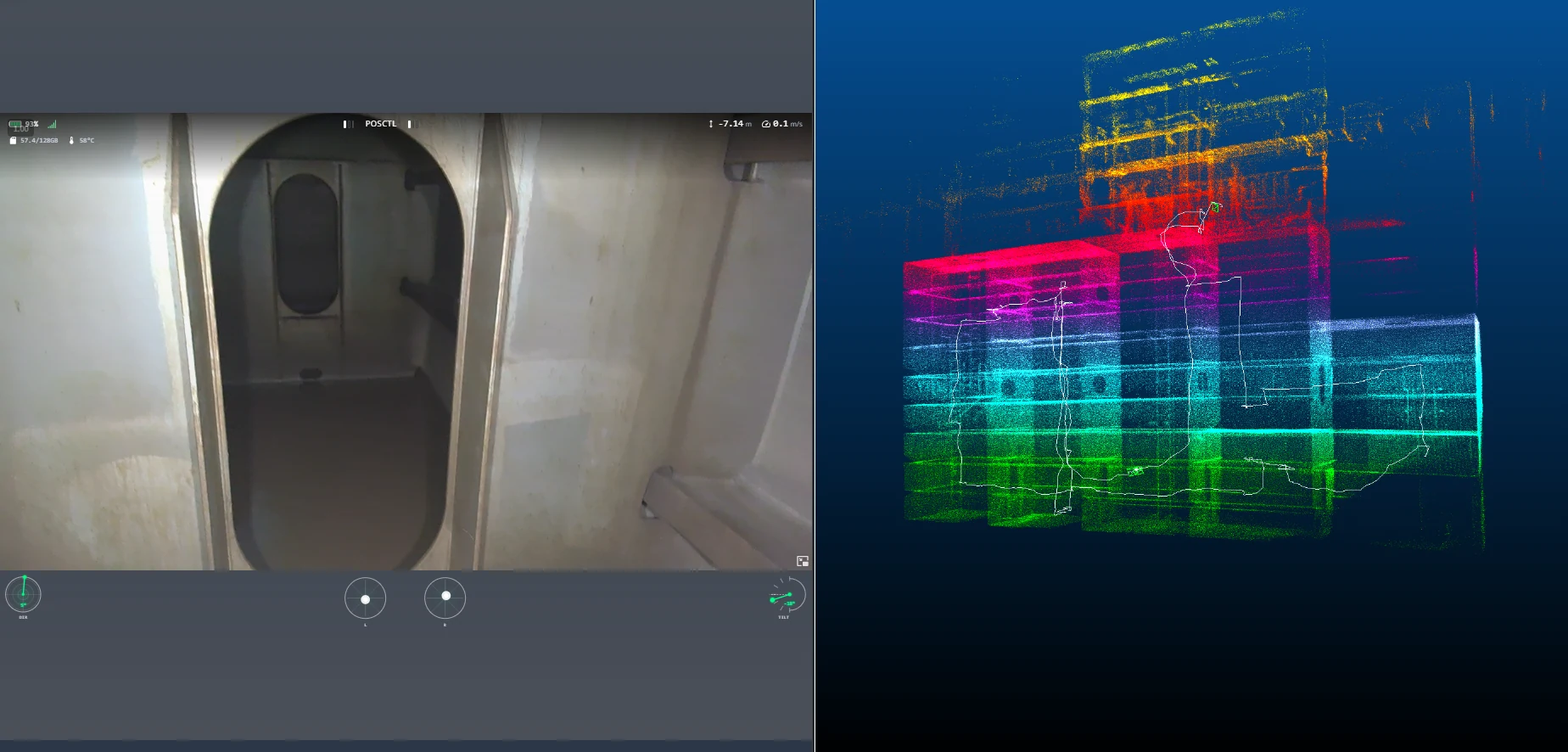
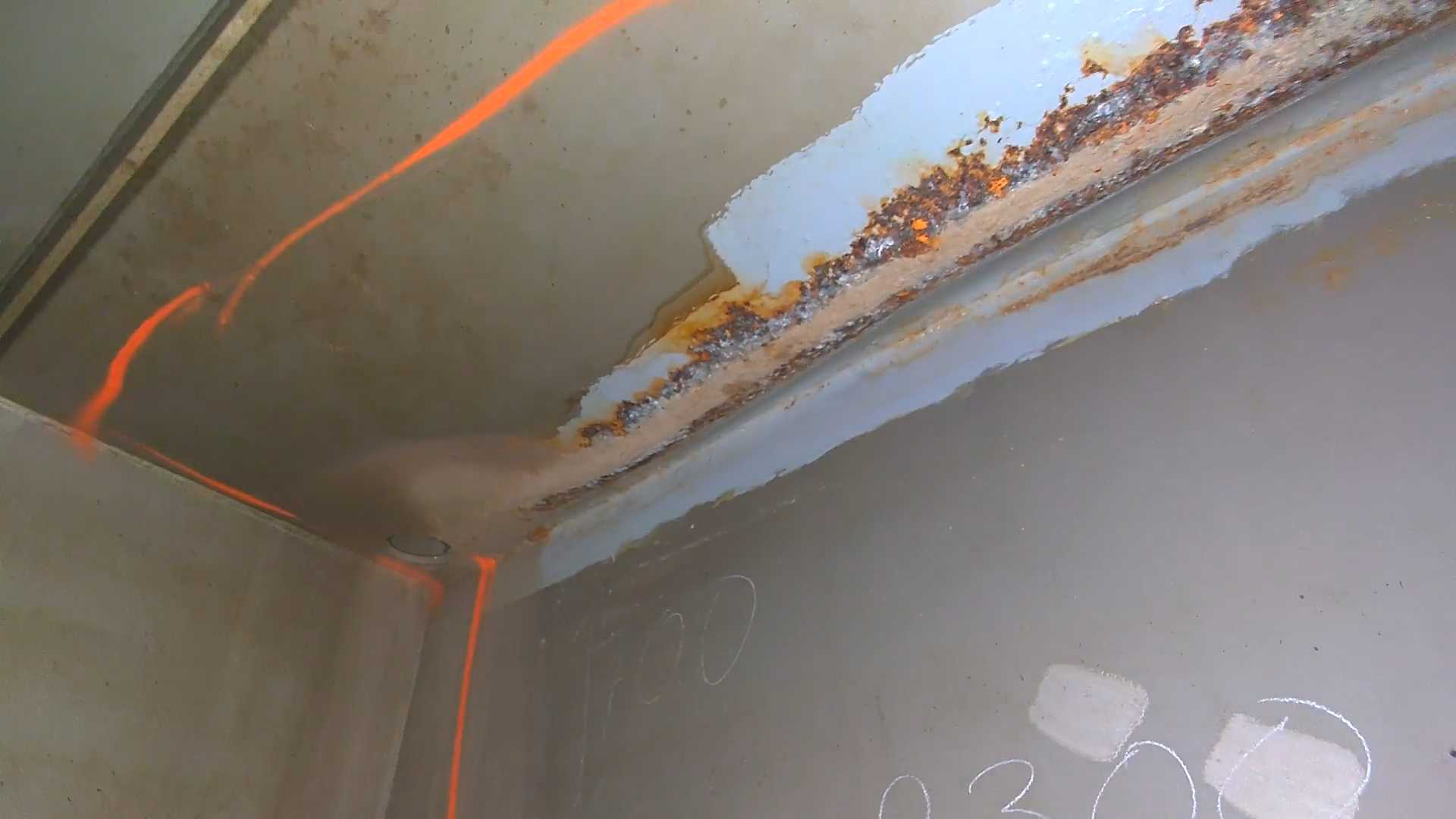
Tank interior captured by the X1 in flight — actual footage frame.
A good fit: owner-driven visual condition assessment of process tanks, ballast tanks, slop tanks, and void spaces — coating breakdown, corrosion, structural condition, and blockages — captured on video for the superintendent and integrity team.
Not a fit: class-credit surveys that require class-society approval, and hull external thickness (UT) gauging. The drone reduces the cost and risk of the visual and pre-survey work; it does not replace certified class survey deliverables.
Staging an FPSO tank for manual inspection means gas-freeing and cleaning, staging or rope access, POB (personnel-on-board) limits, and production impact — offshore, every one of these is expensive. Industry deployments of comparable CVI drones show what's recoverable (industry benchmarks):
The direction is consistent: drones collapse the staging and access overhead that dominates offshore inspection cost.
FPSO tank openings are tight and access is at a premium offshore. The X1's 14-inch-class, cage-protected frame fits openings larger drones cannot, and its 10,480-lumen lighting and 4K camera are built for dark interior surfaces. Priced at less than one-third the cost of legacy CVI systems, it is positioned so that an inspection service company can add units and bill them against a single offshore engagement — the channel the offshore market actually runs on.
For FPSO owners and the service companies that inspect for them, the X1 is a direct path to lower-cost owner-driven CVI.
Offshore, a single avoided tank staging often exceeds the cost of the drone. With multiple tanks per FPSO inspected over a campaign, the savings scale. The X1 is backed by Nolvis Care maintenance coverage at $4,000/year.
If you operate or inspect FPSOs and your bottleneck is the cost and risk of getting a camera into the tank, contact us and we'll walk through your tank configuration and access dimensions.
No. A CVI drone supports owner-driven pre-surveys and condition assessment; it is not a substitute for a class-society survey or hull thickness (UT) gauging, which have their own approval requirements. It reduces the cost and risk of the visual and pre-survey work.
Process, ballast, slop, and void spaces accessible through tank openings — and cargo tanks where atmosphere and cleaning permit. The X1 fits openings as small as ~16 inches, which matters on tight offshore access points. Standard gas-free and permit-to-work conditions apply.
Industry deployments report large reductions — e.g., a tank inspection completed in ~4 days versus ~2 weeks, and a cargo/ballast program cut from ~800 hours to ~50 hours with around $600,000 saved. Actual savings depend on the staging method replaced and the production impact.
Tell us your tank configuration and smallest access opening — we'll advise on fit for your campaign.
