
API 653 tank inspection without scaffolding.
The scaffold is the cost. The X1 takes it out of the visual inspection: a close visual inspection drone that goes in through the manway while your inspector stays outside.
API 653 doesn't require a scaffold. Getting a camera to the shell usually does.
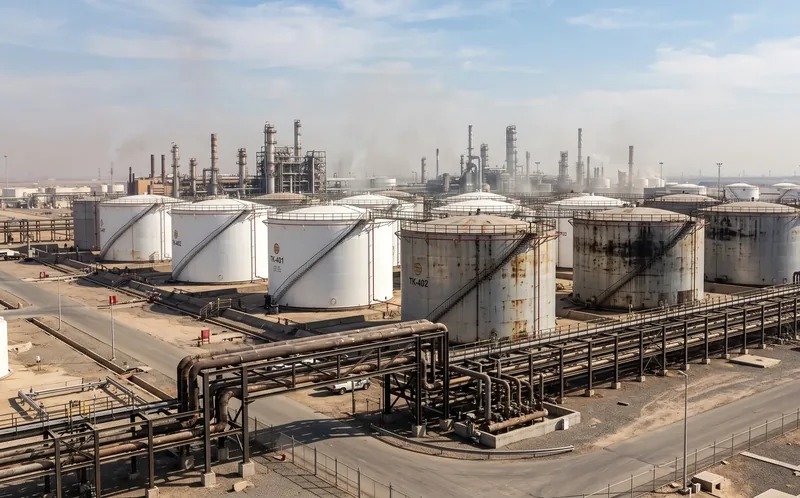
API 653 mandates periodic in-service and out-of-service inspection of aboveground storage tanks. For most operators that means scaffolding, confined-space entry, multi-day shutdowns and five- to six-figure costs, per tank, per cycle.
A close visual inspection drone changes the cost structure without changing what API 653 requires. The inspector still certifies. The findings still go into the report.
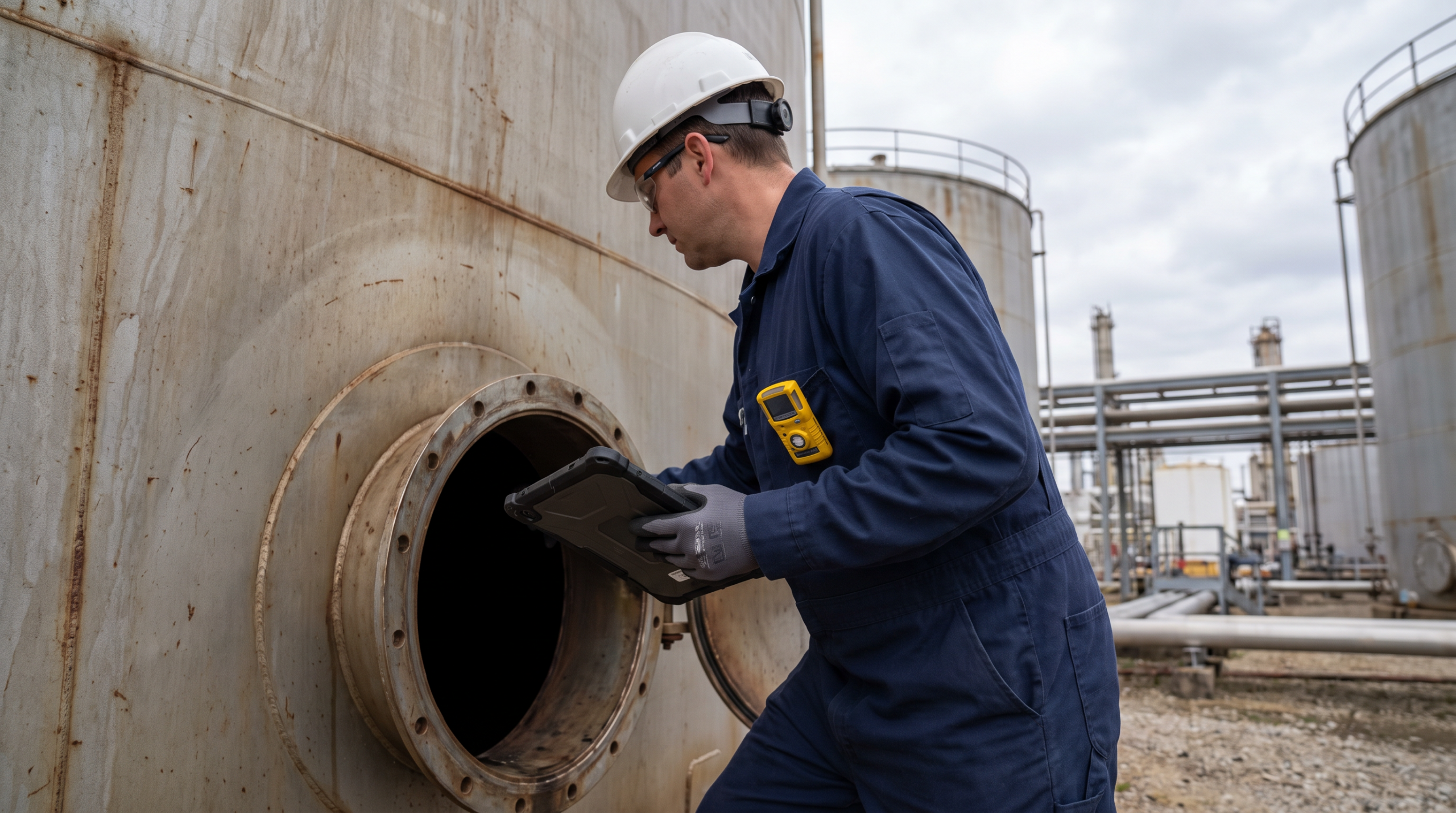
The camera goes in. The technician stays outside.
Through the manway
The compact cage passes openings as small as 16 in, including typical tank manways. Send us your opening size and we'll confirm fit.
Steady close-up
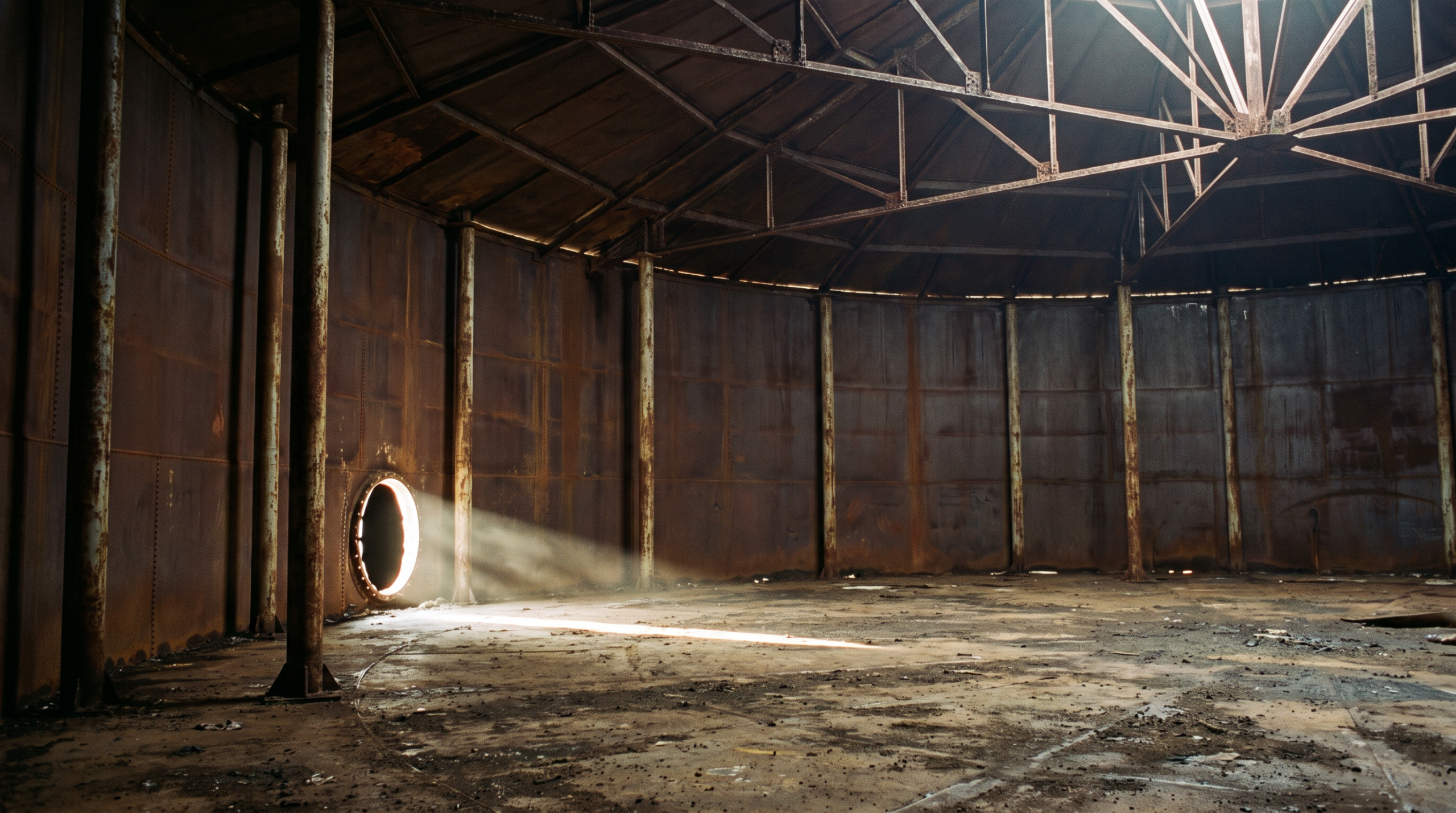
LiDAR holds position without GPS, so a first-week operator can park in front of the surface and look. 4K camera, 10,480-lumen light.
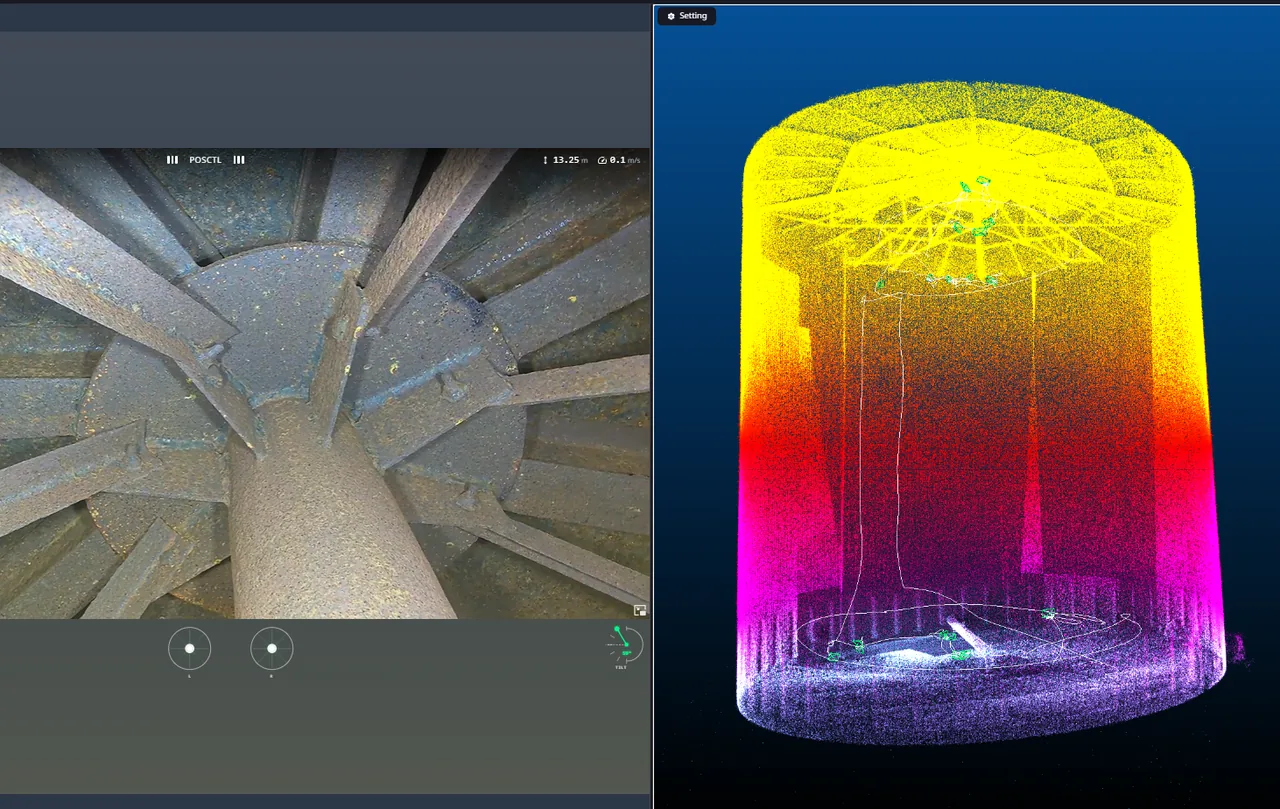
A measurable record
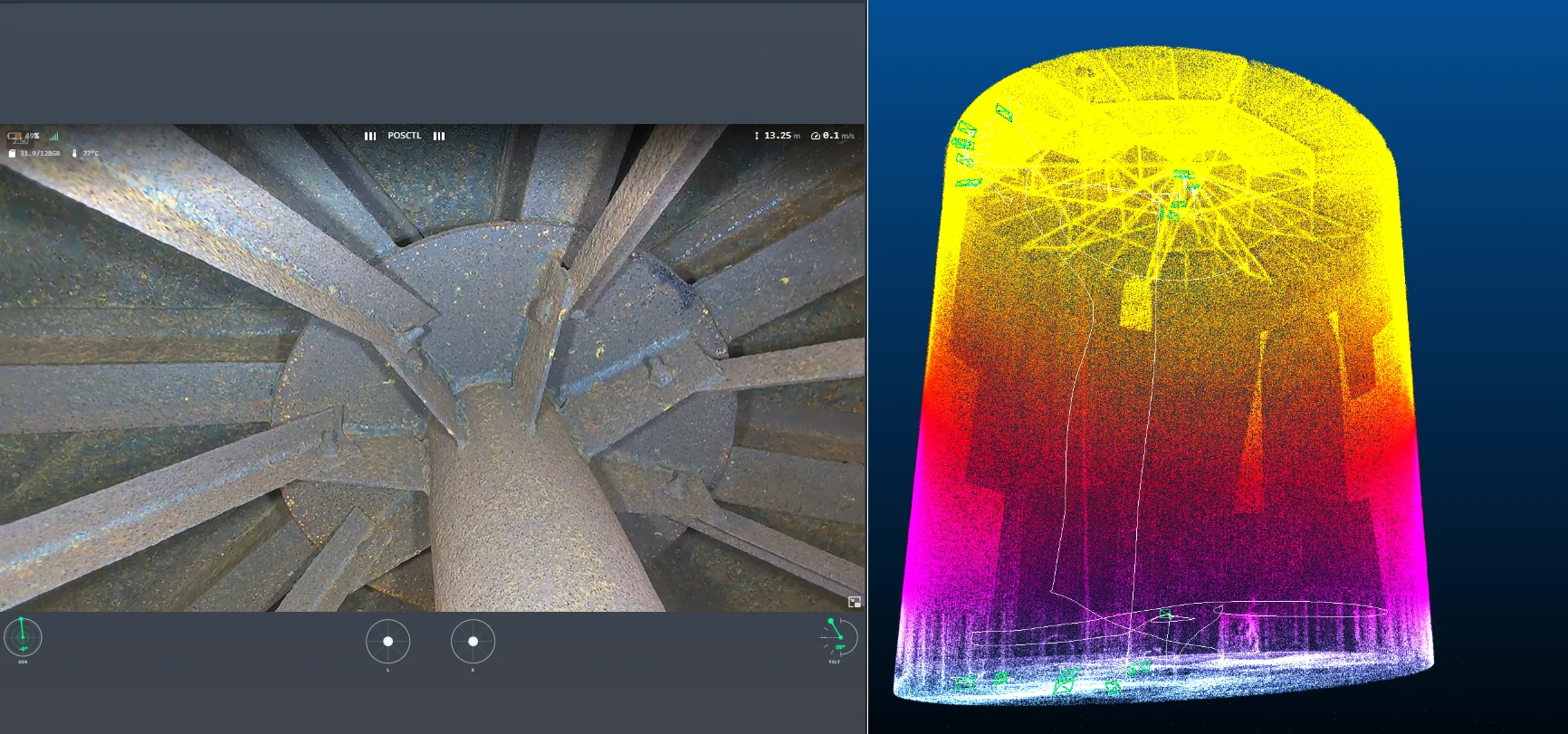
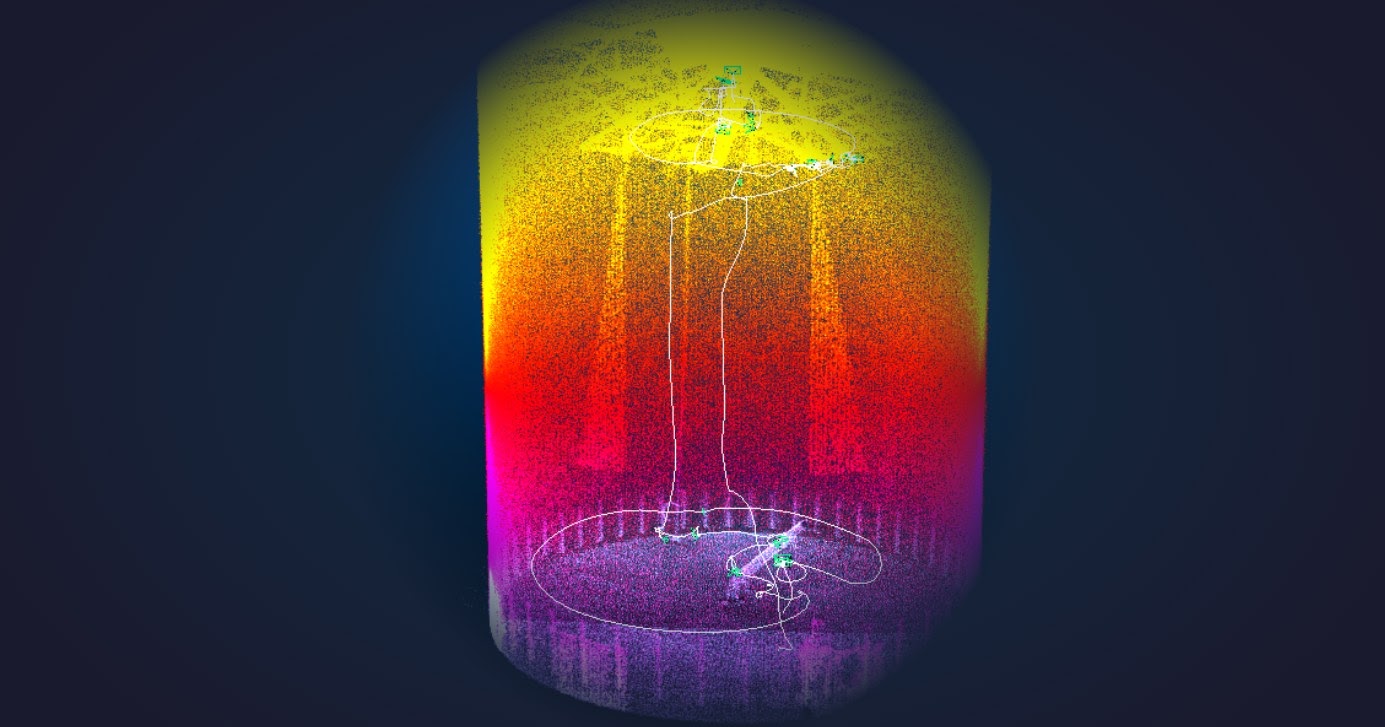
Every flight captures a 3D point cloud (.las) tied to the asset's geometry, reviewed and reported in Nolvis X Cloud.
Inspection-grade data for the report.
Standards-based tank inspection at a major U.S. oil and gas asset owner
4K visual records and LiDAR point clouds document tank shells, roofs, internal structures, fittings and coating condition, while reducing confined-space entry and scaffolding.
API 653 and the role of CVI
API 653 (Tank Inspection, Repair, Alteration, and Reconstruction) outlines requirements for the inspection of in-service and out-of-service aboveground storage tanks. Qualified inspectors assess shell condition, bottom integrity, roof structures and appurtenances on defined intervals. The standard does not prescribe inspection method; it prescribes inspection outcome. Close visual inspection, when it can access the surface, supports the visual component of that requirement.
The real cost of the old method
For a standard 50,000-barrel storage tank, a scaffold-supported internal inspection commonly includes:
- Scaffold erection and strike
- Tank preparation (gas-free, clean, ventilated)
- Multi-day downtime and product displacement costs
- CSE permitting, standby rescue, atmospheric monitoring overhead
Together these often reach five to six figures per inspection on larger tanks. A drone that goes in through the manway can take the scaffold out of the visual inspection.
Work out your own ROI
Savings depend on how many tanks you inspect, how you access them today and how much downtime staging takes. Enter your own numbers in the ROI calculator. Inspection service companies can spread the X1 across many client jobs.
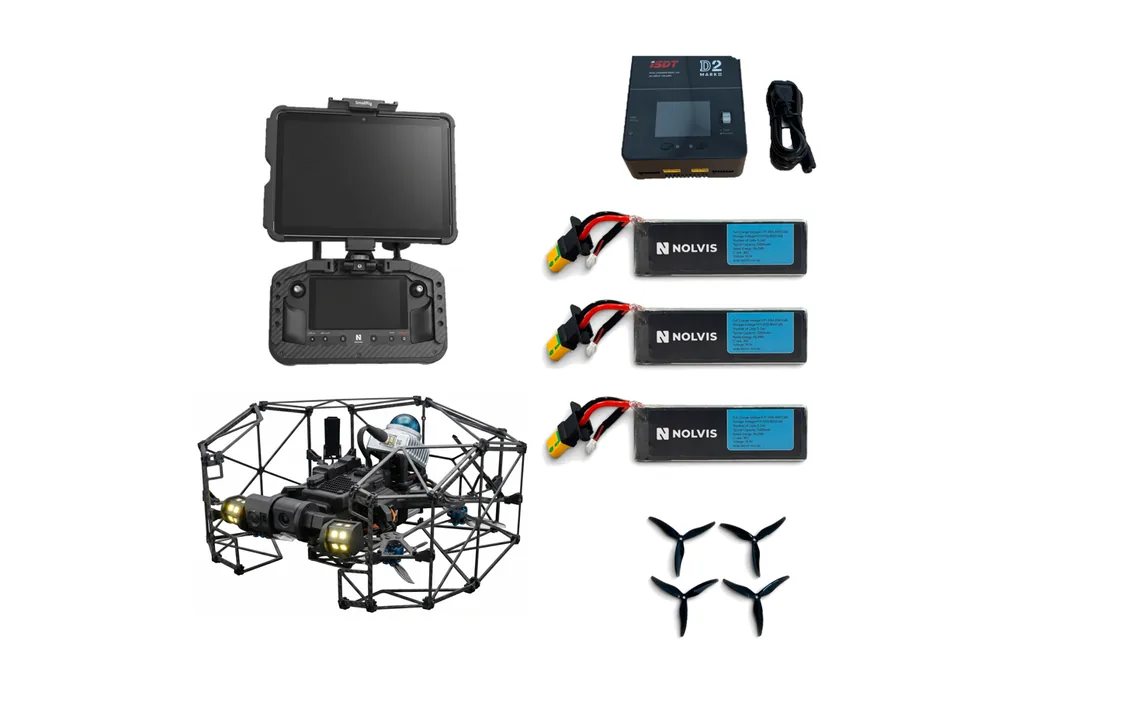
X1 Essential package
X1 ×1 · batteries ×3 · Nolvis Care ×1, in one portable case.
More on tank inspection
Get pricing from Nolvis.
Tell us what you need to inspect and your smallest access opening. We'll confirm fit and send a tailored quote.