
Send the drone first: how X1 cuts safety risk in confined-space and at-height inspection
Every confined-space entry and every climb puts a person at risk. Here is how a caged indoor drone lets teams look first, so people go in only when they must.
Confined spaces and work at height are two of the riskiest parts of any inspection plan. Most of the danger comes from a person being inside, or up high, for the inspection itself. An indoor inspection drone such as Nolvis X1 lets the team do the first look from outside. People go in only when the data says they need to.
Why these jobs are risky
A tank, boiler, duct or underground stope is not built for people to work in. The U.S. Occupational Safety and Health Administration (OSHA) describes a confined space as one with "limited or restricted means for entry or exit" that "is not designed for continuous occupancy." Spaces that need a permit can hold a hazardous atmosphere, a risk of engulfment, or walls that trap a person.
The risk does not stop with the entrant. A well-known NIOSH alert found that more than 60% of confined-space deaths were would-be rescuers: people who went in to help.
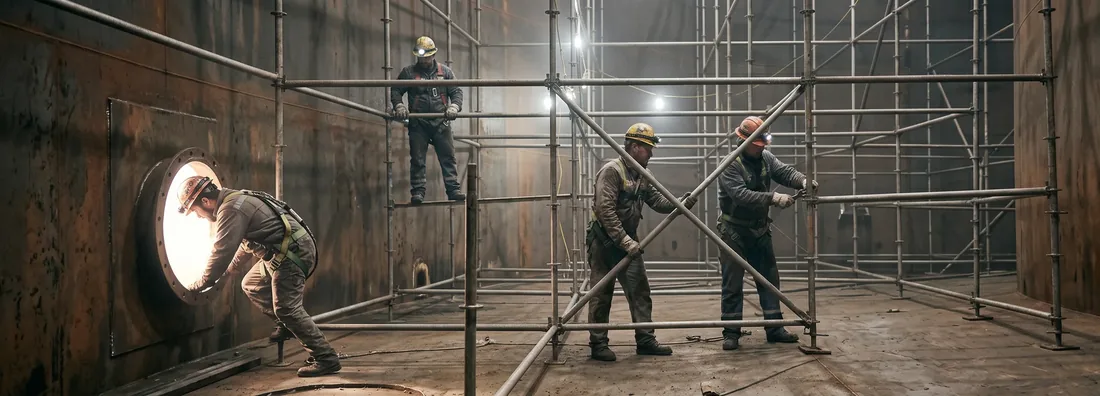
Height adds a second layer. In the 2023 U.S. Census of Fatal Occupational Injuries, falls, slips and trips caused 885 of 5,283 work deaths. Inside a boiler or a tall tank, an inspection often means scaffolding, rope access or a lift, plus the time to build and remove it.
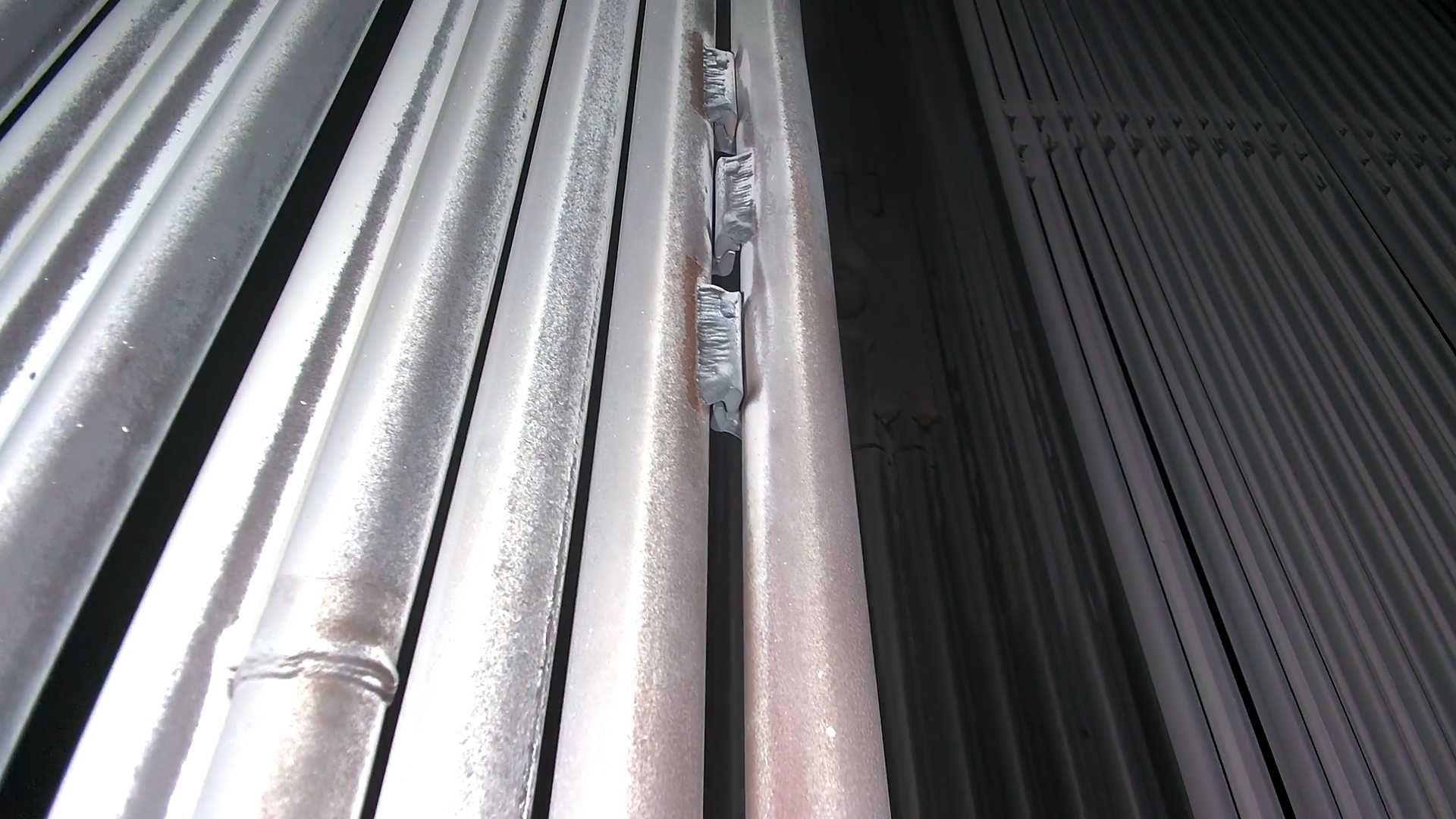
Steps 3 and 4 are often a search: most of the time is spent finding the problem, not fixing it. That search is the part a drone can take over.
How X1 changes the plan: look first, enter only when needed
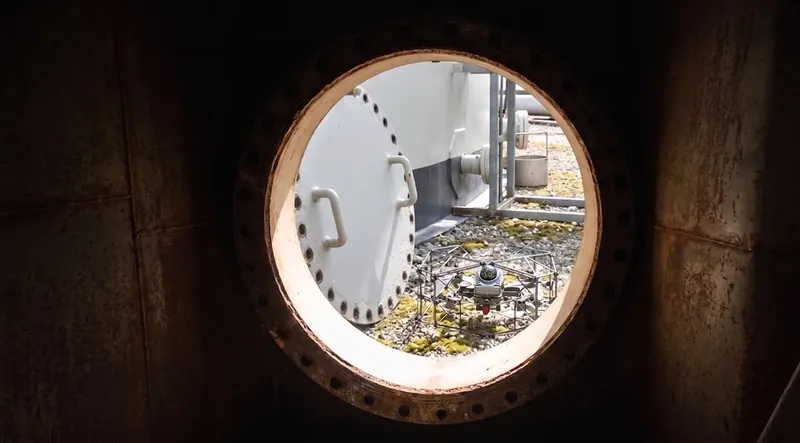
Nolvis X1 is a caged drone built for visual inspection inside tanks, boilers, ducts and stopes. It fits through openings as small as 16 in. The pilot stays outside the space, at the manway or a safe access point, and flies the drone in.
- The person stays outside. The first look happens without anyone entering, climbing or standing on scaffolding.
- High walls without access gear. The drone reaches roof areas, upper boiler walls and high duct sections that would otherwise need scaffolding or rope access.
- Flying where GPS does not reach. X1 positions itself without GNSS, using LiDAR and vision sensors, so it can fly inside a dark, enclosed space.
- A protective cage. A cage surrounds the drone for work in tight spaces close to walls and internal structures.
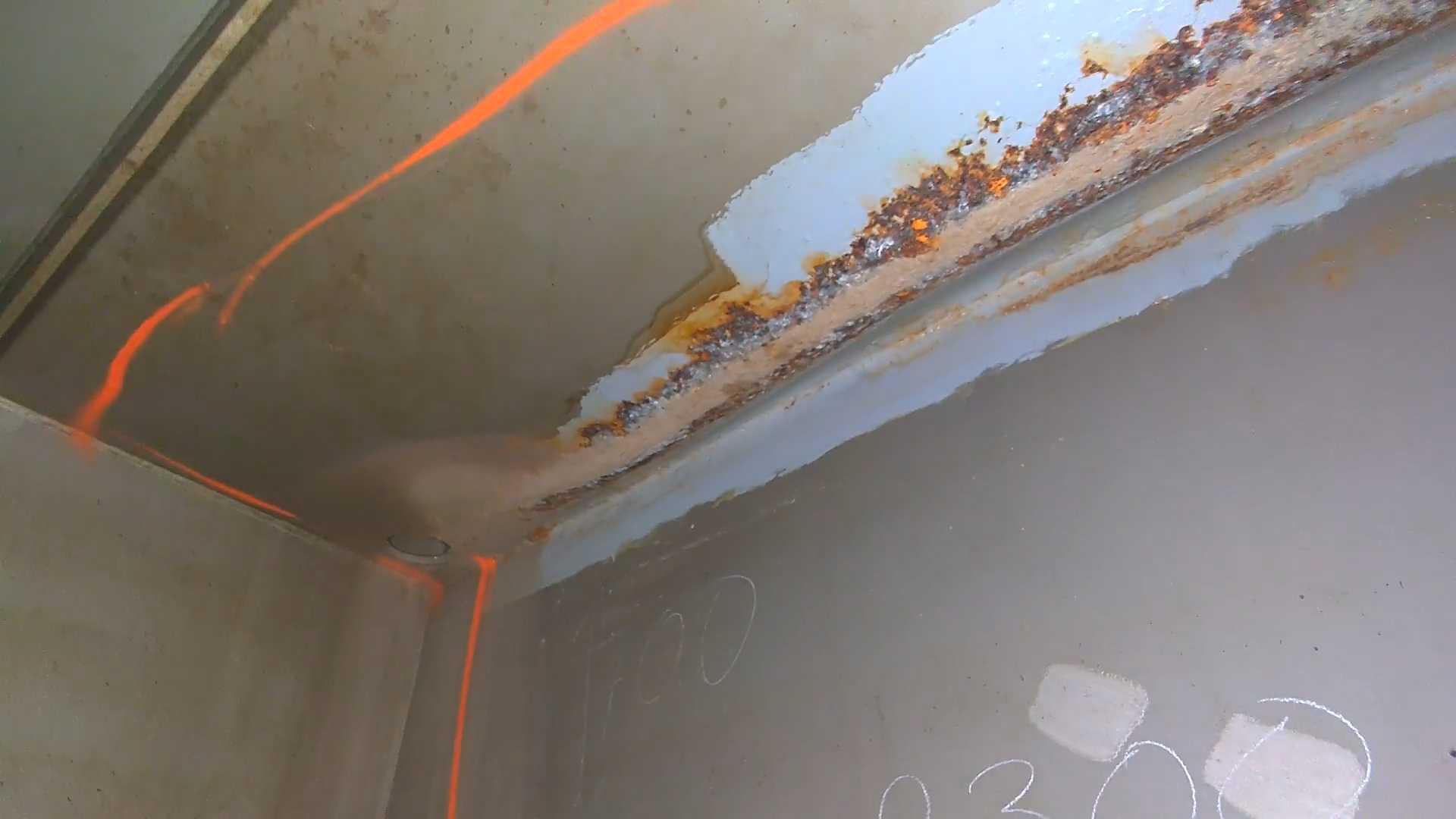
- Light where there is none. Up to 10,480 lumens of on-board lighting and a 4K camera (8 MP, 1/1.7-inch sensor) record the inside of the asset for review later.
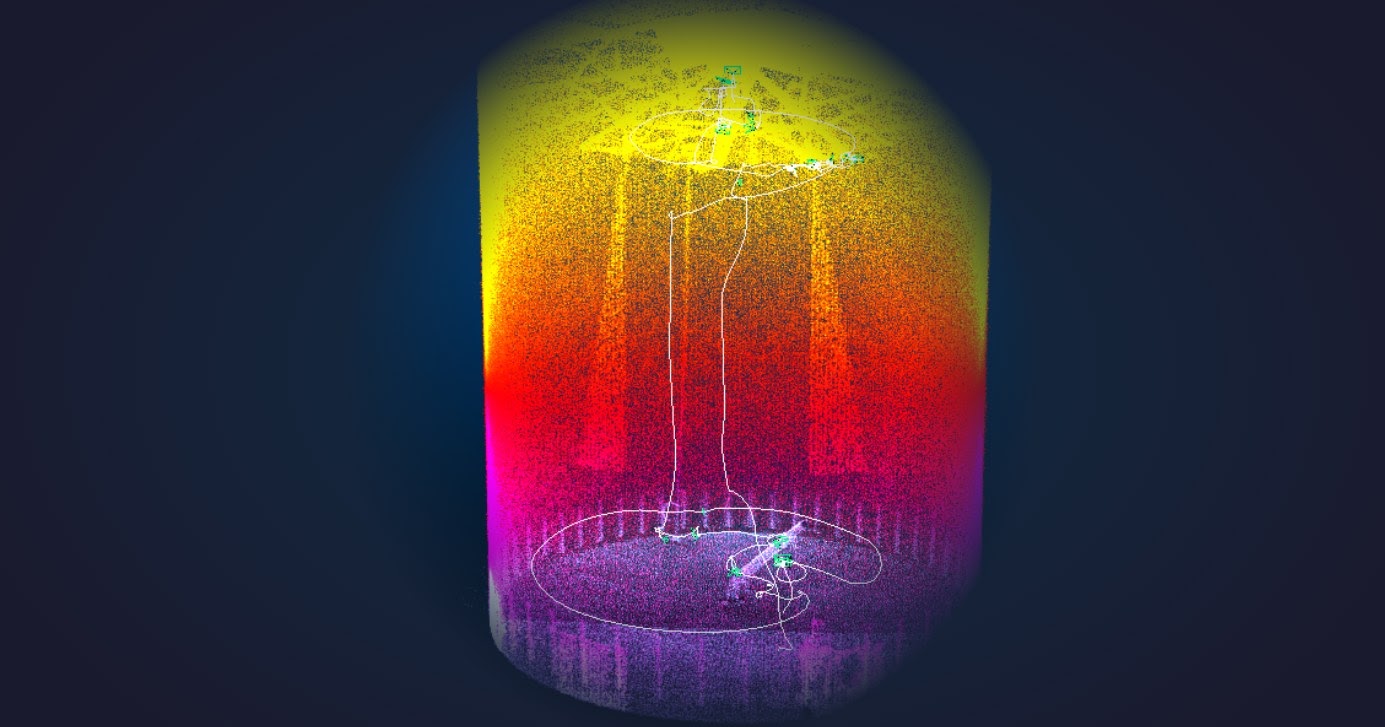
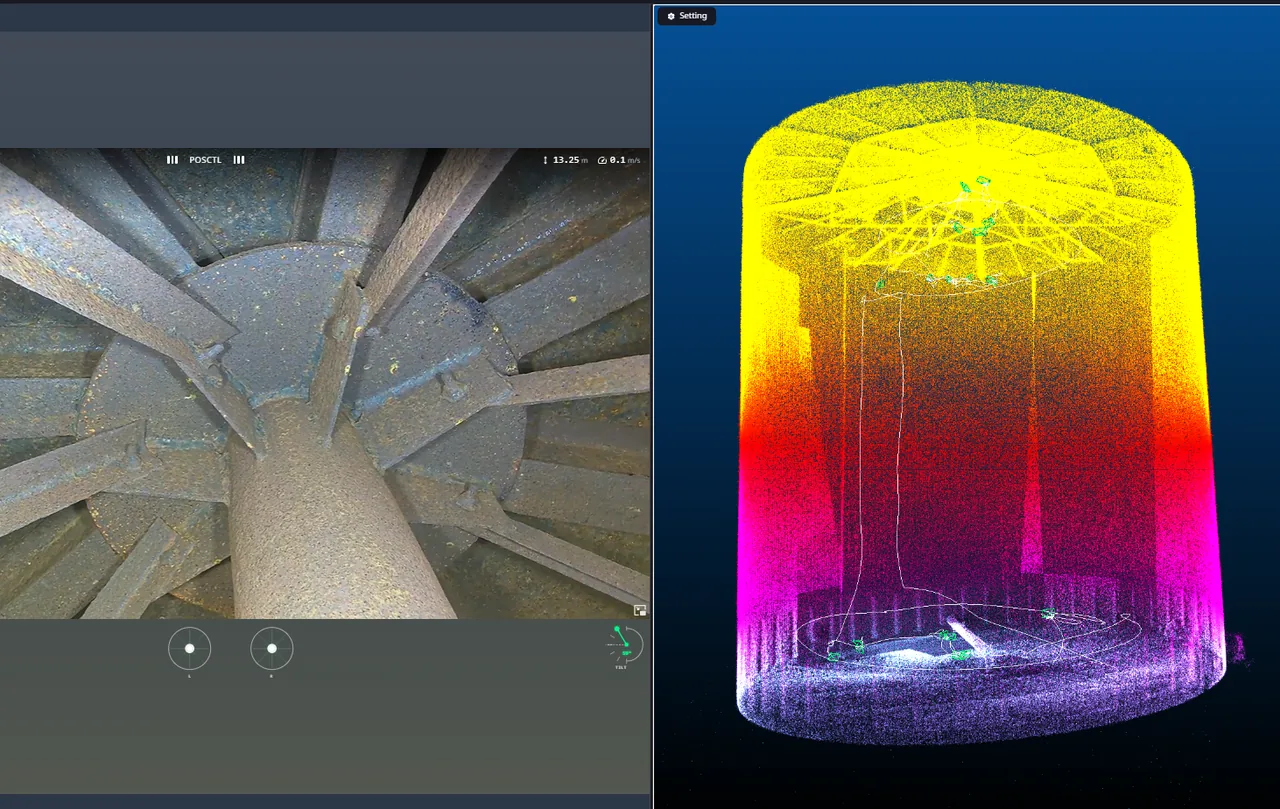
- A 3D view of the space. LiDAR data can be viewed as a point cloud in X Cloud, so findings can be placed on the asset and shared with the team.
The result is a better entry decision. If the drone shows nothing that needs hands-on work, nobody needs to go in for the inspection. If it finds a problem, the crew goes in knowing exactly where to go and what tools to bring, which means less time inside and fewer repeat entries.
A simple planning checklist
- List the spaces and high areas you inspect each year and how often people enter them.
- Mark which entries are only for a first visual check.
- For those, plan a drone flight first and keep the entry permit as a follow-up step.
- Agree up front what the drone must see for the team to skip or shorten the entry.
- Keep your site's confined-space and work-at-height rules in place. A drone flight is a work activity too: brief it, permit it if your site requires it, and keep a safe zone at the access point.
What a drone does not replace
A drone is a visual tool. It does not replace gas testing, permits, rescue planning or hands-on repairs, and it does not take measurements that need contact with the surface. It works best as the first step in your inspection plan, so people enter less often and with a clear purpose.
Where the exposure really comes from
Count the hours a person spends inside or up high during a typical internal inspection:
Preparation
Isolation, ventilation, gas testing, permits, rescue standby.
Access
Building scaffolding or rigging rope access to reach high walls.
The look itself
Walking or climbing the space to find what needs attention.
Repeat visits
Going back in because a photo was missed or unclear.
See X1 inside a real asset
We will walk through your inspection plan with you.